
Ashwagandha: India’s Most Powerful Adaptogen — What It Actually Does, Who Should Take It, and How to Take It Correctly
By Dr. Dipti Deshpande, BAMS | Panchkarma Specialist & Ayurvedic Physician | Swaanubhutii, Pune
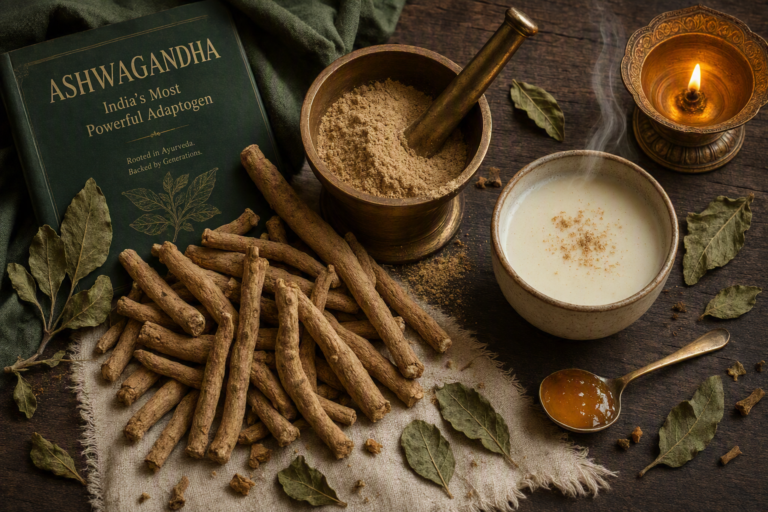
Ashwagandha is arguably the most talked-about herb in Ayurveda right now — and simultaneously one of the most misused. In the past five years, it has moved from the shelves of Ayurvedic clinics into mainstream supplement culture, wellness influencer routines, and urban pharmacy aisles. Everyone seems to be taking it. Very few are taking it correctly, at the right time, in the right form, for the right reasons.
In my 16+ years of clinical practice at Swaanubhutii in Pune, I have prescribed Ashwagandha hundreds of times — and I have also seen the consequences of patients self-prescribing it based on a YouTube recommendation, without understanding their own Prakriti or current Dosha imbalance. This blog is my attempt to set the record straight: what Ashwagandha genuinely does, who it is for, how it should be taken, and, equally importantly, who should be cautious about taking it.
What Ashwagandha Actually Is — Beyond the Hype
Ashwagandha (Withania somnifera) has been used in classical Ayurveda for over 3,000 years. Its Sanskrit name literally translates as “smell of horse” — a reference both to its characteristic aroma and to the traditional belief that it confers the strength and vitality of a horse. It is classified in Ayurveda under Rasayana — the category of herbs that promote longevity, vitality, and deep tissue nourishment.
Ashwagandha is primarily a Vata and Kapha balancing herb. It is warm, heavy, and grounding in its Ayurvedic qualities (Gunas) — which is precisely why it is so effective for the stress, anxiety, insomnia, depletion, and joint stiffness that are characteristic of Vata imbalance. These same warming, heavy qualities also mean it is not universally appropriate — something the wellness industry rarely mentions.
Modern pharmacology has confirmed much of what classical Ayurveda understood intuitively: Ashwagandha contains withanolides — steroidal lactones that directly modulate the HPA (hypothalamic-pituitary-adrenal) axis, reducing cortisol production, supporting thyroid function, and improving mitochondrial health. It is genuinely adaptogenic — meaning it helps the body maintain equilibrium under stress rather than simply sedating or stimulating it.
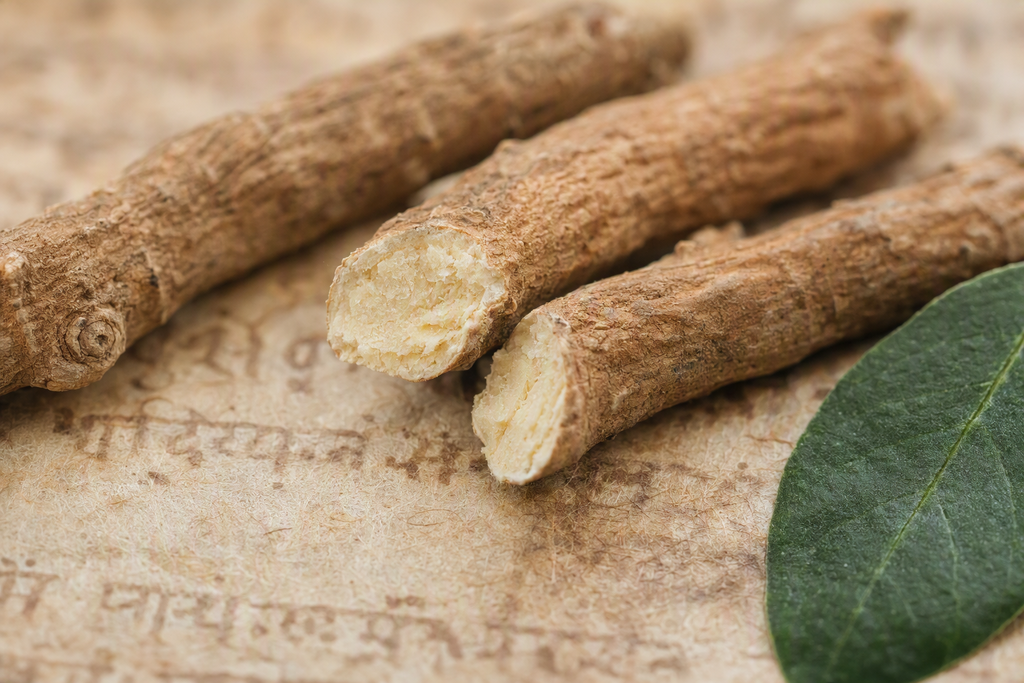
What Ashwagandha Actually Does in the Body — Six Clinically Supported Actions
1. Lowers cortisol and manages chronic stress.
This is Ashwagandha’s most well-documented action. Multiple clinical trials have demonstrated significant reductions in serum cortisol levels with consistent Ashwagandha supplementation over 60 days. For patients whose chronic fatigue, sleep difficulty, and anxiety are driven primarily by sustained high cortisol — an extremely common pattern in Pune’s working population — this is the most directly relevant benefit.
2. Improves sleep quality, not just sleep onset.
Ashwagandha’s sleep benefits are frequently misunderstood. It is not a sedative — it does not knock you out. What it does is improve the quality and depth of sleep by calming the HPA axis and lowering the nervous system’s background activation level. Patients who have struggled with light, easily disrupted sleep — a classic Vata pattern — often report the most significant benefit here.
3. Rebuilds Ojas — the body’s core vitality.
In Ayurvedic physiology, Ojas is the refined end-product of all seven tissue (Dhatu) transformation processes — the body’s deepest reserve of immunity, vitality, and resilience. Chronic stress, illness, overwork, and poor sleep all deplete Ojas. Ashwagandha is one of the most powerful Ojas-building (Bringhana) herbs in the classical pharmacopoeia, making it particularly valuable in the recovery phase after illness, after Panchkarma detox, or after prolonged periods of depletion.
4. Reduces joint pain and inflammation.
Ashwagandha has significant anti-inflammatory properties, supported both by classical Ayurvedic use (it is a primary herb in Sandhivata — Ayurvedic joint disease) and by modern research demonstrating inhibition of inflammatory markers including CRP and IL-6. Patients with monsoon joint stiffness, early-stage arthritis, or chronic joint ache from Vata imbalance consistently respond well to Ashwagandha as part of a broader treatment programme.
5. Supports thyroid function.
Clinical evidence shows Ashwagandha supports T3 and T4 hormone levels, making it a useful adjunct in hypothyroid management under physician guidance. At Swaanubhutii, we include Ashwagandha in our thyroid support protocols alongside dietary guidance and, where indicated, Panchkarma therapy. It should always be used with medical monitoring when thyroid disease is diagnosed.
6. Enhances strength, endurance, and muscle recovery.
Ashwagandha has been shown to increase VO2 max, improve muscle strength, and reduce exercise-induced muscle damage. This is the basis for its popularity among athletes and fitness-conscious individuals — and it is genuinely supported by evidence. However, for most of my clinic patients, the stress, sleep, and joint benefits are far more immediately relevant than athletic performance.
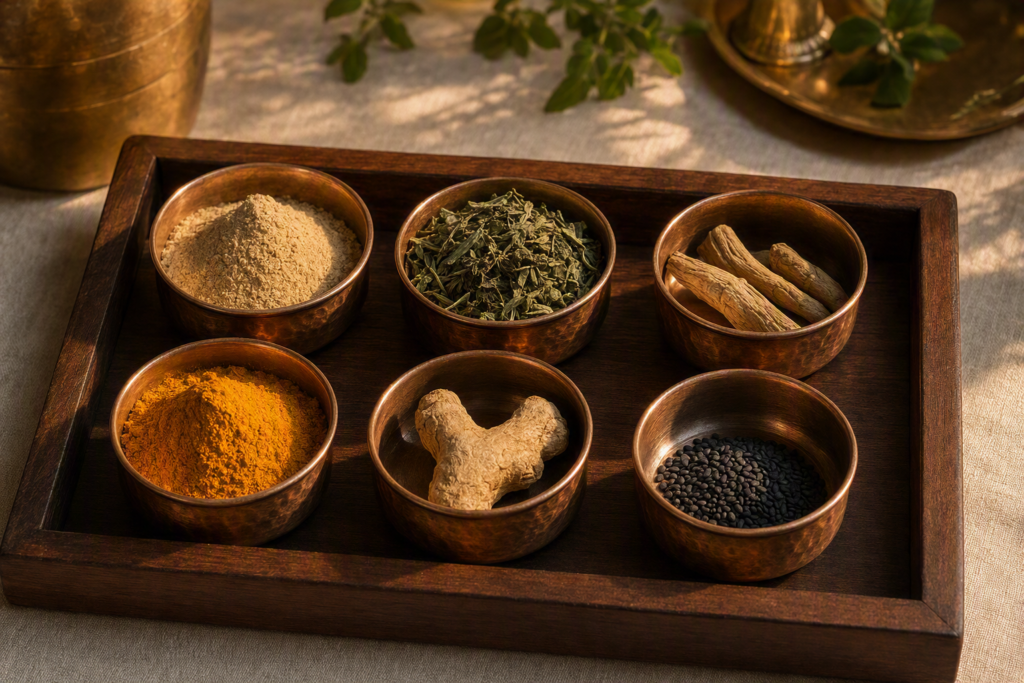
Who Ashwagandha Is Specifically For — And Who Should Be Cautious
This is the most important section of this blog, and the one most wellness content skips entirely.
Ashwagandha is primarily a Vata-pacifying herb. This means it is most directly indicated for people with Vata-dominant Prakriti or current Vata imbalance — and less appropriate, or potentially counterproductive, for those with significant Pitta excess.
Ashwagandha is well-suited for:
• Chronic stress, burnout, or emotional depletion — particularly when accompanied by physical fatigue and anxiety
• Insomnia or light, easily disturbed sleep driven by an overactive, anxious mind
• Post-illness or post-surgery recovery, when the body needs deep tissue rebuilding
• Monsoon joint stiffness and early Vata-driven joint pain
• Post-Panchkarma Rasayana phase — to rebuild Ojas after the detox has cleared the channels
• Hypothyroid management (under physician guidance)
• Men and women experiencing generalised weakness, low stamina, or reduced reproductive vitality
Ashwagandha requires more caution or may be contraindicated for:
• Significant Pitta excess or active inflammation — Ashwagandha’s warming nature can aggravate Pitta conditions including acid reflux, inflammatory skin conditions, and high internal body heat
• Pregnancy — Ashwagandha has uterine-stimulating properties and is classically contraindicated in pregnancy
• People on thyroid medication — Ashwagandha affects thyroid hormone levels and requires medical monitoring when combined with levothyroxine or other thyroid drugs
• Active fever or acute infections — warming herbs generally should not be given during an active febrile state
• People with autoimmune conditions — as an immune-modulating herb, Ashwagandha’s effect in autoimmune disease requires clinical assessment
This list of cautions is precisely why I strongly recommend consulting an Ayurvedic physician before starting Ashwagandha independently — particularly at the higher doses now commonly sold in capsule form.
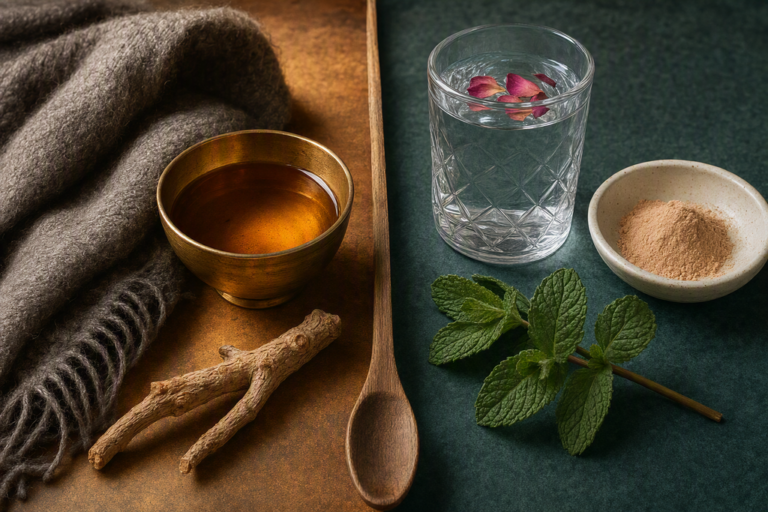
How to Take Ashwagandha Correctly — Form, Dose, and Timing
The classical form: Ashwagandha churna (powder) with warm milk and honey. The traditional preparation is 3–5 grams of Ashwagandha root powder taken with warm cow’s milk and a small amount of raw honey, once or twice daily. This is not just cultural habit — milk is the classical anupana (carrier) for Ashwagandha, and it significantly improves the absorption of withanolides and the herb’s Ojas-building action. Taking Ashwagandha in this form, at night before bed, is the approach I most commonly recommend in clinic for stress, depletion, and sleep quality.
Capsule form: effective but requires attention to dose. Standardised Ashwagandha extract capsules (typically 300–600mg of KSM-66 or Sensoril extract, standardised to 5% withanolides) are clinically effective and convenient. The clinical trials cited above used these standardised extracts. For most adults, 300mg twice daily with meals is a reasonable starting point. Higher doses (600mg+ daily) should be taken only under guidance, as they carry a greater risk of Pitta aggravation in susceptible individuals.
Duration: Ashwagandha is not a short-term supplement. As a Rasayana herb, Ashwagandha works cumulatively. Benefits are typically noticeable after 4–6 weeks and become more significant at 8–12 weeks of consistent use. Taking it for a week and expecting transformation is the most common reason patients report it “did nothing.” At the same time, indefinite continuous use without periodic breaks is not the classical approach — we typically recommend 3-month courses followed by a 2–4 week rest period.
Timing: evening is usually optimal. Because Ashwagandha’s most prominent effects are on cortisol regulation and sleep quality, evening dosing (30–60 minutes before bed, with warm milk) tends to produce the most noticeable early benefit. Morning dosing is also used — particularly when the primary goal is energy, athletic performance, or thyroid support.

Ashwagandha in Monsoon — Why This Season Is Particularly Relevant
Varsha Ritu (monsoon) is a season of Vata aggravation — the very Dosha that Ashwagandha most directly addresses. The combination of atmospheric pressure changes, dampness, temperature swings, and the weakening of Agni that characterises monsoon creates a predictable cluster of symptoms: joint stiffness, low energy, disrupted sleep, increased anxiety, and reduced immunity.
Ashwagandha, taken through the monsoon months as part of a broader Rasayana programme, directly counters each of these patterns. At Swaanubhutii, we frequently include Ashwagandha as part of our post-Panchkarma monsoon Rasayana protocol — after the Basti-based detox has cleared the Vata imbalance, Ashwagandha helps rebuild the tissue vitality and nervous system resilience that the season depletes.
Used this way — sequenced correctly within a full Ayurvedic programme, not taken independently in isolation — Ashwagandha produces its strongest results.
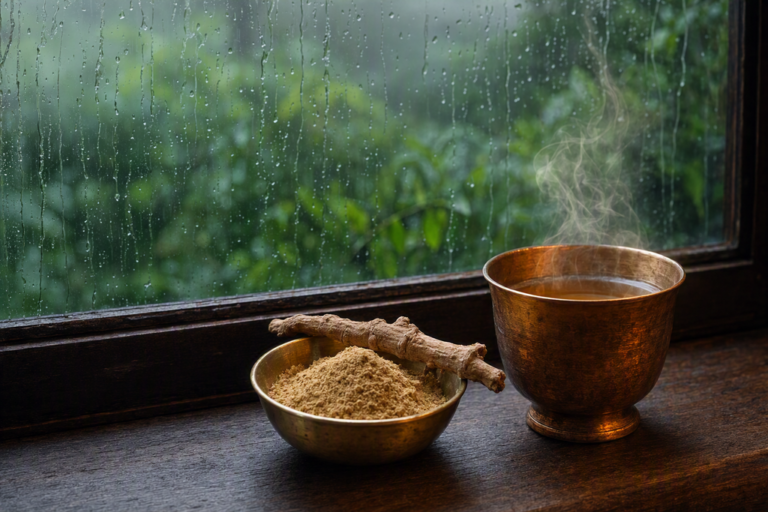
Our Ashwagandha Formulation at Swaanubhutii
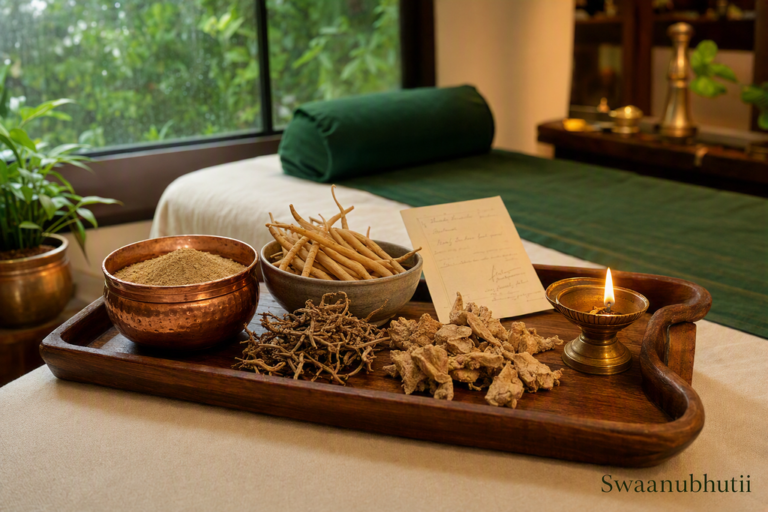
Our clinic-formulated Ashwagandha preparation combines root-based Ashwagandha churna with Shatavari, Vidarikanda, and Bala — a classical Rasayana combination specifically designed for patients recovering from depletion, managing chronic stress, or in the post-Panchkarma rebuilding phase. Unlike commercial supplements that rely on isolated extract, this combination targets Ojas, Shukra Dhatu, and Rakta Dhatu simultaneously, producing a more comprehensive Rasayana effect than the single herb alone.
Our Ashwagandha preparation is available at the clinic and prepared fresh in small batches using 100% chemical-free, classically sourced ingredients. For patients outside Pune, we arrange delivery for active patients under Dr. Dipti’s direct care.
📞 Book an Ashwagandha & Rasayana consultation with Dr. Dipti at Swaanubhutii: +91 90216 49935
🌐 swaanubhutii.com | 📍 Warje, Pune | @swaanubhutii
Frequently Asked Questions
Can I take Ashwagandha every day?
Yes, for defined periods. The classical approach is a 3-month course followed by a 2–4 week break. Taking it continuously without breaks for years is not the traditional Rasayana approach and has not been adequately studied for long-term safety. Dr. Dipti will advise on duration based on your specific situation at consultation.
Can Ashwagandha be taken with coffee or tea?
Ideally no — coffee and tea are stimulants that can partially counteract Ashwagandha’s cortisol-lowering, calming action. The classical anupana (carrier) is warm milk. If milk is not suitable, warm water is an acceptable alternative. Taking it with coffee specifically is counterproductive for the stress and sleep goals most patients have.
I have been taking Ashwagandha for 2 weeks and feel more anxious. Why?
This occasionally happens in people with significant Pitta excess, as Ashwagandha’s warming nature can temporarily aggravate Pitta-driven anxiety before it settles. It can also occur when the dose is too high. We recommend pausing, consulting Dr. Dipti for a Prakriti assessment, and restarting at a lower dose with the appropriate anupana if Ashwagandha is indeed suitable for your constitution.
Is Ashwagandha safe for women? I have heard conflicting things.
Ashwagandha is safe and specifically beneficial for most women — it is widely used in Ayurveda for female hormonal balance, reproductive health, and stress management. The main contraindication for women is pregnancy, where it should be avoided entirely. For women who are breastfeeding, the evidence is insufficient and caution is advised. In all other cases, it is appropriate and often very effective.
Can my teenager take Ashwagandha for exam stress?
In classical Ayurveda, Ashwagandha is considered appropriate from adolescence onward. For teenagers, we recommend lower doses (1–3 grams of churna or 150–300mg of extract) and always under parental awareness and ideally physician guidance. Dietary and lifestyle support for stress management should be the foundation; Ashwagandha is a complement, not a substitute for addressing the root causes of exam anxiety.
What makes Swaanubhutii’s Ashwagandha preparation different from what I can buy at a medical store?
Commercial Ashwagandha products are typically standardised single-herb extracts designed for general market use. Our clinic preparation is a multi-herb classical Rasayana combination — Ashwagandha with Shatavari, Bala, and Vidarikanda — formulated specifically for the Ojas-building and Dhatu-nourishing goals of classical Rasayana therapy. It is prepared fresh in small batches, without fillers, binders, or synthetic additives, and prescribed in a dose and combination specific to each patient’s needs.
Dr. Dipti Deshpande, BAMS | Panchkarma Specialist, Swaanubhutii