
Monsoon Hair Fall: Why It Happens Every Year, and the Ayurvedic Scalp Care That Actually Stops It
By Dr. Dipti Deshpande, BAMS | Panchkarma Specialist & Ayurvedic Physician | Swaanubhutii, Pune
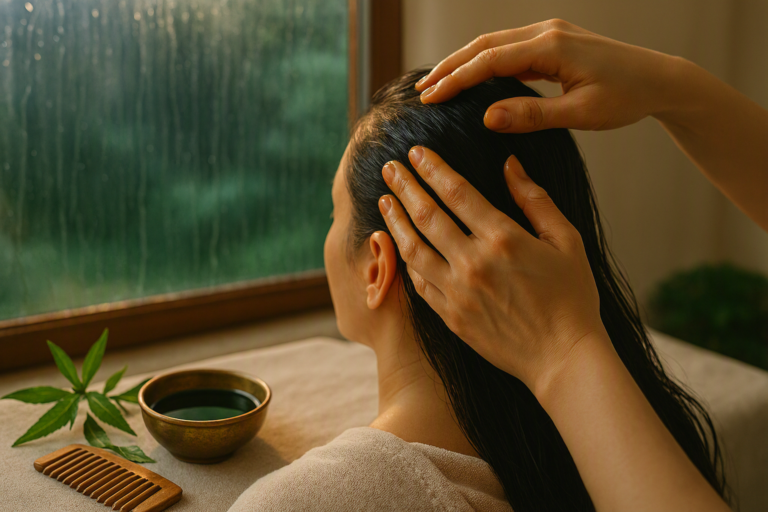
Almost on cue, every year in the last week of June, my clinic begins filling with a very specific complaint: “Doctor, my hair is falling out in handfuls — what’s happening?” The hairbrush has more strands in it than usual. The shower drain clogs faster. And almost everyone asks the same follow-up question: is this normal, or is something actually wrong?
The honest answer is both. Monsoon hair fall is an extremely common, well-documented seasonal pattern in Ayurveda — but “common” doesn’t mean it has to be accepted passively. There is a specific reason it happens, and a specific, manageable routine that addresses it at the root rather than simply switching to yet another anti-hair-fall shampoo.
Why Monsoon Specifically Triggers Hair Fall
Hair, in Ayurvedic physiology, is considered an Asthi Dhatu upadhatu — a sub-tissue connected to bone tissue, and deeply influenced by the body’s overall Dosha balance. As Greeshma Ritu (summer) transitions into Varsha Ritu (monsoon), the body undergoes a significant internal shift: the accumulated heat and depletion of summer give way to rising Kapha and aggravating Vata, both of which directly affect the scalp and hair follicles.
Increased humidity creates a scalp environment that’s more prone to excess oil production, fungal activity, and follicle congestion — all Kapha-driven effects. At the same time, aggravated Vata weakens the root’s grip on the hair shaft, making strands more prone to shedding with even gentle handling. This combination — a congested, damp scalp environment paired with weakened root strength — is precisely why monsoon hair fall feels both greasy and excessive at the same time, a pattern many patients describe as confusing because it doesn’t match either a “dry hair” or “oily hair” problem they’re used to addressing.

It's Not Just the Weather — Digestion Plays a Role Too
What surprises most patients is learning that hair fall is rarely a scalp-only problem. In Ayurveda, healthy hair growth depends on properly nourished Rakta (blood tissue) and Asthi (bone tissue), both of which are downstream of strong, consistent Agni (digestive fire). Monsoon naturally weakens Agni for almost everyone, regardless of diet — the increased dampness and reduced atmospheric pressure slow digestion even in people who eat carefully.
When digestion weakens, the nutrients meant to nourish hair follicles simply don’t reach them in sufficient quality, even if your diet itself hasn’t changed. This is why patients often tell me, “I’m eating exactly the same way I always do, so why is my hair suddenly falling more?” The food may be unchanged — but the body’s capacity to process and deliver that nutrition has shifted with the season.

The Ayurvedic Scalp Care Routine That Actually Helps
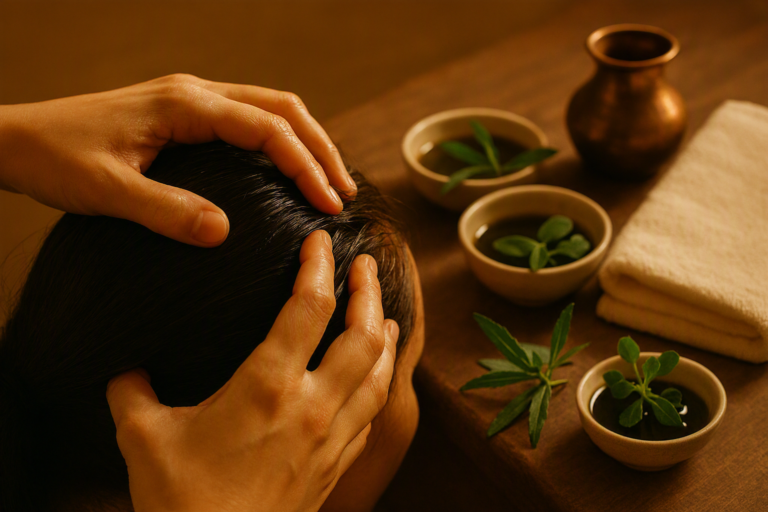
Weekly scalp Abhyanga with Bhringraj or Brahmi oil. A dedicated scalp massage — not just oiling before a wash, but a slow, deliberate massage held for 15 to 20 minutes — directly improves circulation to the hair follicles and pacifies the Vata that’s weakening root strength. Bhringraj is specifically classified in Ayurveda as Keshya, meaning hair-promoting, and Brahmi adds a calming, nervous-system benefit that indirectly supports hair health, since stress is itself a hair fall accelerant.
Don’t over-wash, but don’t under-wash either. Monsoon’s humidity tempts many people into washing hair more frequently to manage oiliness, which can strip the scalp and worsen dryness at the root even while the surface looks oily. Two to three washes a week, with a gentle, sulphate-free cleanser, tends to strike the right balance for most scalp types in this season.
Dry your hair and scalp thoroughly after every wash or rain exposure. This is the single most overlooked piece of advice, and arguably the most important. A damp scalp left to air-dry slowly, especially overnight, creates exactly the warm, moist environment that Kapha-driven fungal and follicle issues thrive in. Towel-drying thoroughly and avoiding sleeping with wet hair makes a measurable difference.
Strengthen Agni to support hair from within. Since weakened digestion is part of the root cause, the same Agni-supporting habits we recommend for overall monsoon wellness apply directly here: warm, freshly cooked meals, ginger and black pepper in cooking, and avoiding cold or raw food that further slows digestion in this already Agni-weakening season.
Internal Rasayana support. Our clinic-formulated Chyawanprash, rich in Amla and over 40 supporting herbs, supports the Rakta and Asthi Dhatus that hair depends on. For more targeted cases, classical formulations containing Bhringraj, Amla, and Ashwagandha taken internally provide deeper nou
What's Normal, and What Warrants a Closer Look
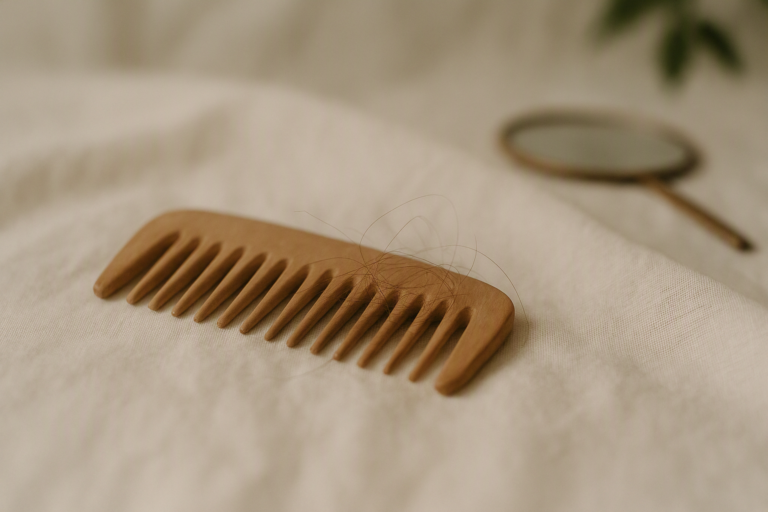
Some increase in shedding through monsoon is genuinely expected and typically self-resolves as the season stabilises into its later weeks. However, if hair fall feels significantly heavier than in previous years, continues well past the first month of monsoon, or comes with visible scalp redness, flaking, or thinning patches, this usually indicates the seasonal pattern has compounded with an underlying imbalance — commonly a more entrenched Pitta or Kapha condition, or in some cases, an Agni disturbance that’s been building for longer than this season alone.
How We Approach This at Swaanubhutii
When patients come to us with significant monsoon hair fall, we don’t begin with a shampoo recommendation. We begin with a Prakriti and Dosha assessment to understand whether the dominant pattern is Kapha-driven scalp congestion, Vata-driven root weakness, or a digestive root cause that needs addressing first. From there, we design a combination of scalp therapies, internal Rasayana support, and — for more persistent cases — targeted Panchkarma therapies like Nasya, which has a direct, classical association with scalp and hair health through its action on the head’s channels.
Most patients following a consistent routine through the season notice the excessive shedding settling back to normal within four to six weeks, alongside a visibly healthier scalp.

📞 Book a hair and scalp consultation with Dr. Dipti at Swaanubhutii: +91 90216 49935
🌐 swaanubhutii.com | 📍 Warje, Pune | @swaanubhutii
Frequently Asked Questions
Is it normal to lose more hair in monsoon than in other seasons?
Yes, a moderate increase is a well-documented seasonal pattern and typically resolves on its own as monsoon progresses. The concern arises when shedding is severe, prolonged, or accompanied by scalp symptoms.
Can I use regular oil instead of Bhringraj or Brahmi oil?
Coconut or sesame oil offers some general scalp nourishment, but Bhringraj and Brahmi are specifically Keshya (hair-promoting) herbs in classical Ayurveda, and provide a more targeted benefit for monsoon-specific hair fall.
How long before I see a real improvement?
Most patients notice reduced shedding within four to six weeks of consistent scalp care and, where needed, internal support — though visible new growth typically takes a few months longer to become noticeable.
Should I stop oiling my hair if my scalp already feels oily in this weather?
No — the oiliness most people experience in monsoon is a Kapha and humidity effect on the scalp’s surface, not a sign that the follicles themselves are over-nourished. A dedicated, time-limited Abhyanga followed by a proper wash is different from leaving oil on all day, and continues to support root strength.
— Dr. Dipti Deshpande, BAMS | Swaanubhutii
Good work
Great content! Keep up the good work!