
5 Signs Your Body Is Telling You It's Time for a Panchkarma Detox
By Dr. Dipti Deshpande, BAMS | Panchkarma Specialist & Ayurvedic Physician | Swaanubhutii, Pune
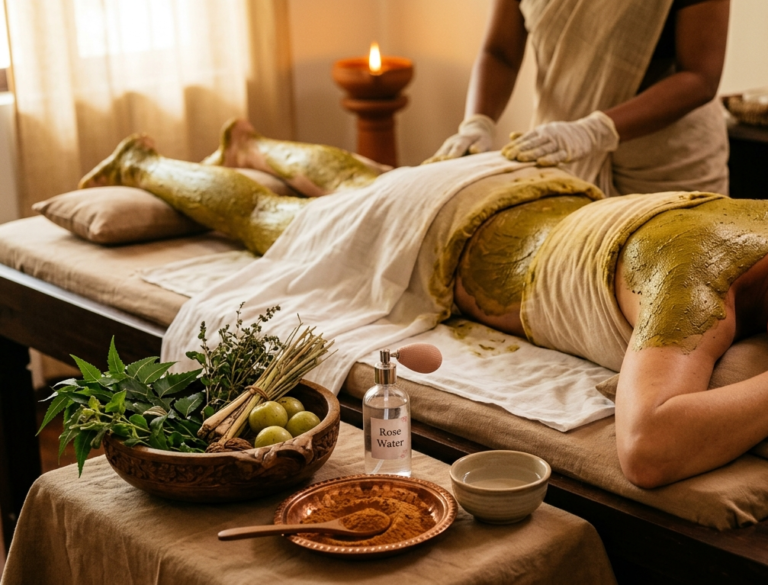
Your body is constantly communicating with you. The problem is, most of us have learned to mute the conversation — popping a painkiller for the headache, reaching for coffee to fight the afternoon slump, scrolling through our phones instead of addressing the anxiety that won’t leave.
In Ayurveda, these symptoms are not random inconveniences. They are precise signals from a system that is accumulating toxins — what Ayurveda calls Ama — and asking for a reset. And the reset it’s asking for is Panchkarma.
After 16 years of clinical practice at Swaanubhutii in Pune, I’ve found that almost every patient who walks into my clinic shares at least three of these five warning signs. Let me walk you through them — and tell you what they actually mean.
What Is Ama and Why Does It Build Up?
Ama is the Ayurvedic term for undigested waste — the toxic by-product of incomplete digestion and metabolism. When your digestive fire (Agni) is weak or irregular, the food you eat isn’t fully processed. The undigested residue accumulates in the tissues, channels, and organs of the body, creating a sticky, heavy obstruction that disrupts normal function.
Ama is not a metaphor — it has physical correlates in the body. It manifests as inflammatory markers, undigested proteins in the gut, accumulated metabolic waste in the lymph, and the characteristic thick white coating you may notice on your tongue in the mornings.
Modern lifestyles are essentially Ama factories: irregular meal times, processed food, chronic stress, insufficient sleep, sedentary work — all of these weaken Agni and accelerate Ama accumulation. Panchkarma is designed specifically to remove this accumulated Ama and rekindle the digestive fire.
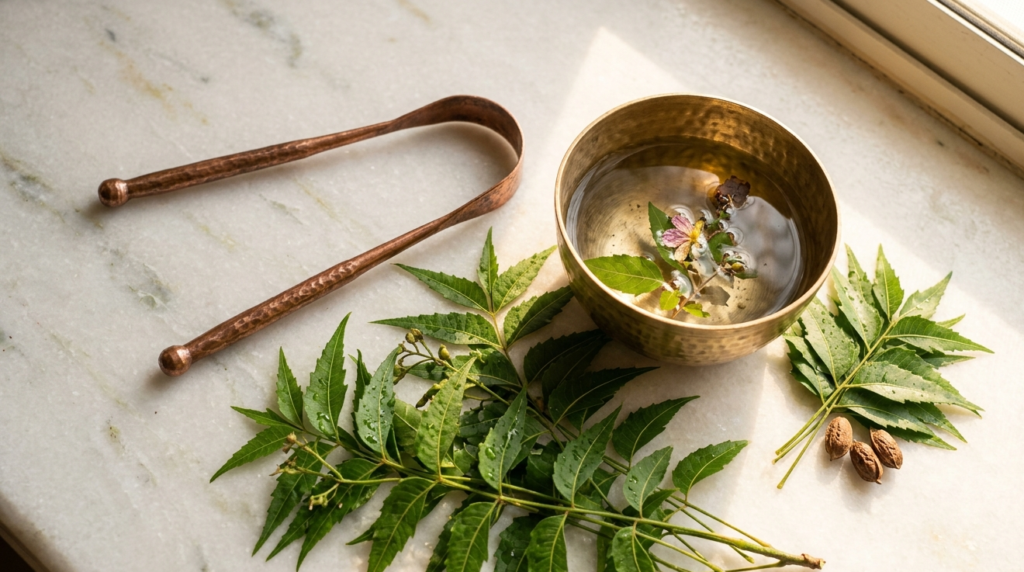
Sign 1: You Wake Up Feeling Heavy and Unrefreshed
You’ve slept 7–8 hours. By rights, you should feel restored. But you wake up feeling as though you barely slept — there’s a physical heaviness in the body, a foggy quality to the mind, and an inexplicable reluctance to get up.
In Ayurvedic diagnostics, this is one of the clearest indicators of significant Ama accumulation. Ama is described as heavy, dense, and cold — qualities that are the direct opposite of Ojas, the body’s vital energy. When Ama is high, Ojas is low, and the morning experience reflects this.
The healthy morning experience in Ayurveda is lightness, clarity, and readiness. If that’s not your experience, your body is telling you that something needs to be removed.
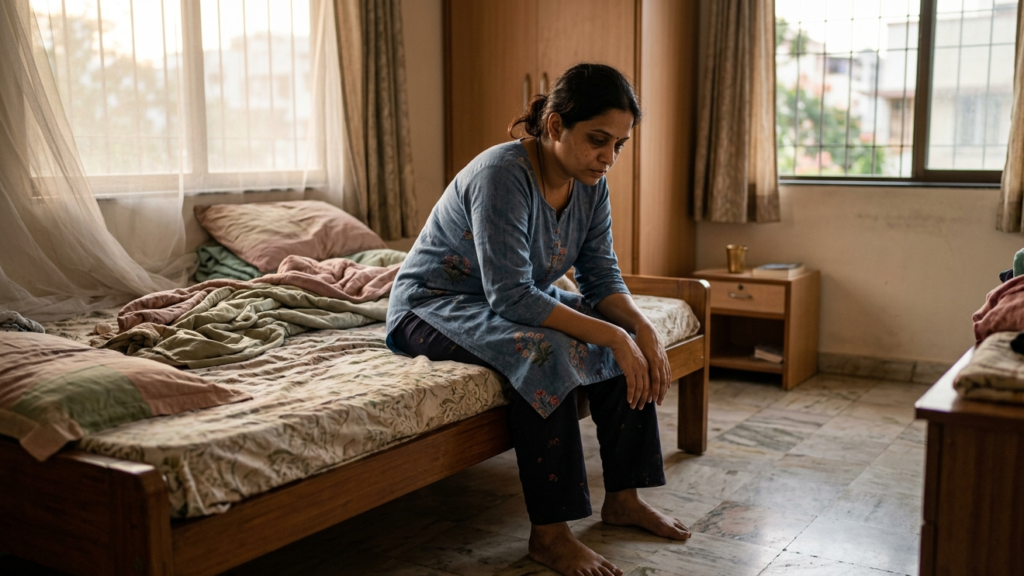
Sign 2: Persistent Digestive Issues — Bloating, Gas, or Irregular Bowel
Ayurveda places digestion at the absolute centre of health. Every disease, from the minor to the chronic, has its origin in impaired Agni. When your digestive fire is compromised, the symptoms are immediate and unmistakable: bloating after meals, excessive gas, irregular bowel movements, acid reflux that antacids only temporarily suppress, and a general abdominal discomfort that your doctor’s scope can’t explain.
These are not just digestive problems — they are system-wide signals. Impaired Agni means that even the nutrition you’re carefully consuming isn’t being absorbed properly. The nutrients meant to build your tissues, maintain your immunity, and fuel your brain are not reaching their destinations.
Panchkarma, specifically Virechan (medicated purgation) and Basti (medicated enema therapy), directly addresses this by clearing the gastrointestinal tract and restoring Agni at its source.
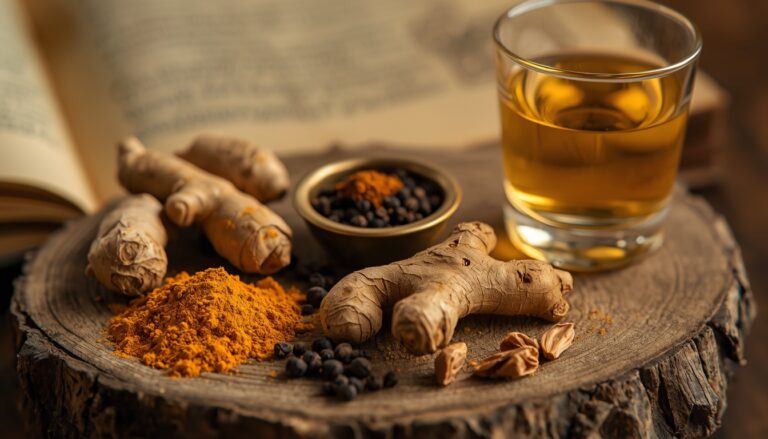
Sign 3: Sudden or Persistent Skin Issues
Your skin is your body’s largest organ of elimination. When the primary detoxification channels — the liver, kidneys, colon, and lymph — are overwhelmed with accumulated Ama, the body routes the excess through the skin. The result: unexpected adult breakouts, recurring boils or rashes, dull and lifeless complexion despite good skincare, or stubborn pigmentation that no cream resolves.
At Swaanubhutii, we rarely treat skin conditions with topical products alone. Our clinical approach addresses the internal Ama accumulation first through Panchkarma detox, and supports the skin externally with our 100% chemical-free, Ayurvedic formulations. If your skin has changed in texture, clarity, or behaviour in the past three to six months without an obvious external cause, your body is routing an internal problem outward.
Sign 4: Chronic Fatigue That Sleep Doesn’t Fix
This is the sign I see most frequently among Pune’s working population between 30 and 50 years old — a persistent, deep fatigue that is wholly disproportionate to the actual physical demands of the day. You’re not running marathons. And yet, by 3pm, you feel as though you’ve been awake for 48 hours.
In Ayurvedic diagnosis, this points to Ojas depletion — a systemic depletion of the body’s core vitality. Ama blocks the channels through which Ojas is produced and distributed. No amount of sleep will restore Ojas until the Ama obstruction is removed.
Panchkarma clears these channels. The Rasayana therapies that follow — including our clinic-formulated Chyawanprash (40+ herbs, Amla-rich) and Suvarnaprash — actively rebuild Ojas. Post-Panchkarma energy improvement is one of the most consistently reported outcomes by our patients.

Sign 5: Mental Fog, Scattered Focus, or Unexplained Anxiety
The mind and the body are not separate systems in Ayurveda — they are one. When Ama accumulates in the physical body, its counterpart (Mana Ama, or mental toxins) accumulates in the mind. This manifests as an inability to concentrate, low-grade anxiety with no identifiable trigger, or a general feeling that you are not fully present in your own life.
Panchkarma therapies — particularly Shirodhara (warm oil forehead therapy) and Nasya (nasal therapy) — have a direct calming effect on the nervous system and the mind. They clear the mental channels (Manovaha Srotas) and restore clarity and groundedness. If your focus and calm seem inaccessible, your body and mind together are signalling a need for deeper cleansing through Panchkarma detox.

How Many of These Apply to You?
If three or more of these five signs are part of your daily experience, your body is clearly asking for a Panchkarma detox. This is not a luxury spa treatment. Panchkarma is classical Ayurvedic medicine, practiced for thousands of years, and today supported by growing clinical evidence for its effects on inflammation, gut health, neurological balance, and systemic wellbeing.
At Swaanubhutii, we begin every Panchkarma programme with a detailed consultation with Dr. Dipti Deshpande. No two programmes are identical — each is designed around your specific Prakriti, Vikruti, and health history. Our clinic uses only 100% chemical-free, handmade Ayurvedic formulations throughout the programme.
📞 Book your Panchkarma consultation at Swaanubhutii, Pune: +91 90216 49935 🌐 swaanubhutii.com | 📍 Warje, Pune | @swaanubhutii

Frequently Asked Questions
Is Panchkarma painful?
No. Panchkarma therapies are deeply relaxing in most cases. Preparatory procedures involve mild sensations, but nothing sharp or alarming. Dr. Dipti explains every step before it begins.
How long does a Panchkarma programme last?
Depending on the condition, programmes range from 5–7 days for mild conditions to 14–21 days for chronic issues. Dr. Dipti will give you a personalised recommendation at the initial consultation.
Can I do Panchkarma while on regular medication?
In most cases, yes. We take a collaborative approach and never advise stopping prescribed medications without your physician’s guidance. Ayurveda and modern medicine can work together effectively.
Is there a best time of year for Panchkarma in Pune?
The pre-monsoon window (May–June) is ideal, as the body is naturally preparing for Varsha Ritu (monsoon). Panchkarma at this time acts as a powerful preventive reset for the season ahead.
— Dr. Dipti Deshpande, BAMS | Panchkarma Specialist, Swaanubhutii
Which type of panchkarma is done?
Great question, Prasad! 😊 At Swaanubhutii, we offer a range of classical Panchkarma therapies tailored to your individual body type (Prakriti) and current health condition.
This typically includes:
• Abhyanga (medicated oil massage)
• Swedana (herbal steam therapy)
• Virechana (therapeutic purgation)
• Basti (medicated enema)
• Nasya (nasal therapy)
…and more, depending on your specific needs.
Dr. Deepti Despande personally assesses each patient before recommending a customized Panchkarma plan — so the therapies chosen for you will be specific to your body’s requirements.
We’d love to have you come in for a consultation to understand which treatments would benefit you the most. Feel free to reach out or book an appointment through our website! 💚
Warm regards,
Team Swaanubhutii
Really thoughtful and insightful post by Dr. Deepti Despande. The way it explains ‘Ama’ and the body’s subtle warning signs like fatigue, digestion issues, and mental fog truly makes you pause and reflect. With 16 years of experience, this kind of awareness feels genuine and trustworthy. A gentle reminder to start listening to our body before it demands attention.
Thank you so much, Nikhil! 🙏 Your words truly mean a lot. Dr. Deepti Despande has always believed that awareness is the first step toward healing — and you’ve captured that beautifully in your comment.
You’re absolutely right — ‘Ama’ accumulation often shows up as those subtle signs we tend to ignore in our busy lives. Fatigue, sluggish digestion, and mental fog are the body’s gentle way of asking for attention before things escalate.
With 16 years of experience, Dr. Deepti ensures that every Panchkarma journey at Swaanubhutii is deeply personalized and rooted in authentic Ayurvedic principles. If you ever feel your body is sending those signals, we’d love to welcome you for a consultation! 😊
Warm regards,
Team Swaanubhutii
Oh yes this works …i think u do a wonderful job at helping people keep it up
Thank you so much, Pritee! 🙏 Your kind words truly mean the world to us. It’s always heartwarming to hear that this resonates with you. Our goal is to make Ayurveda and Panchkarma more accessible and relatable for everyone. Stay connected — there’s so much more coming your way! 😊
This isn’t just an article, it’s a call to listen to your body’s signals. Dr. Dipti Deshpande demystifies Panchkarma, positioning it as a vital tool for systemic wellbeing.
Whether you are a seasoned Ayurveda enthusiast or a skeptic looking for a scientific approach to detoxification, this article is a concise, powerful guide. Under Dr. Deshpande’s guidance, healing is both a science and an art.
Highly recommended for anyone feeling the weight of daily systemic fatigue.
Wow, Kartik — your words beautifully capture exactly what we hoped to convey! 🙏 Panchkarma truly is both a science and an art, and Dr. Deshpande’s dedication to making it approachable for everyone — whether you’re a seasoned Ayurveda practitioner or a curious first-timer — is at the heart of everything we do at Swaanubhutii. Thank you for reading so deeply and sharing such a thoughtful reflection. We hope to see you on a healing journey with us soon! 🌿✨